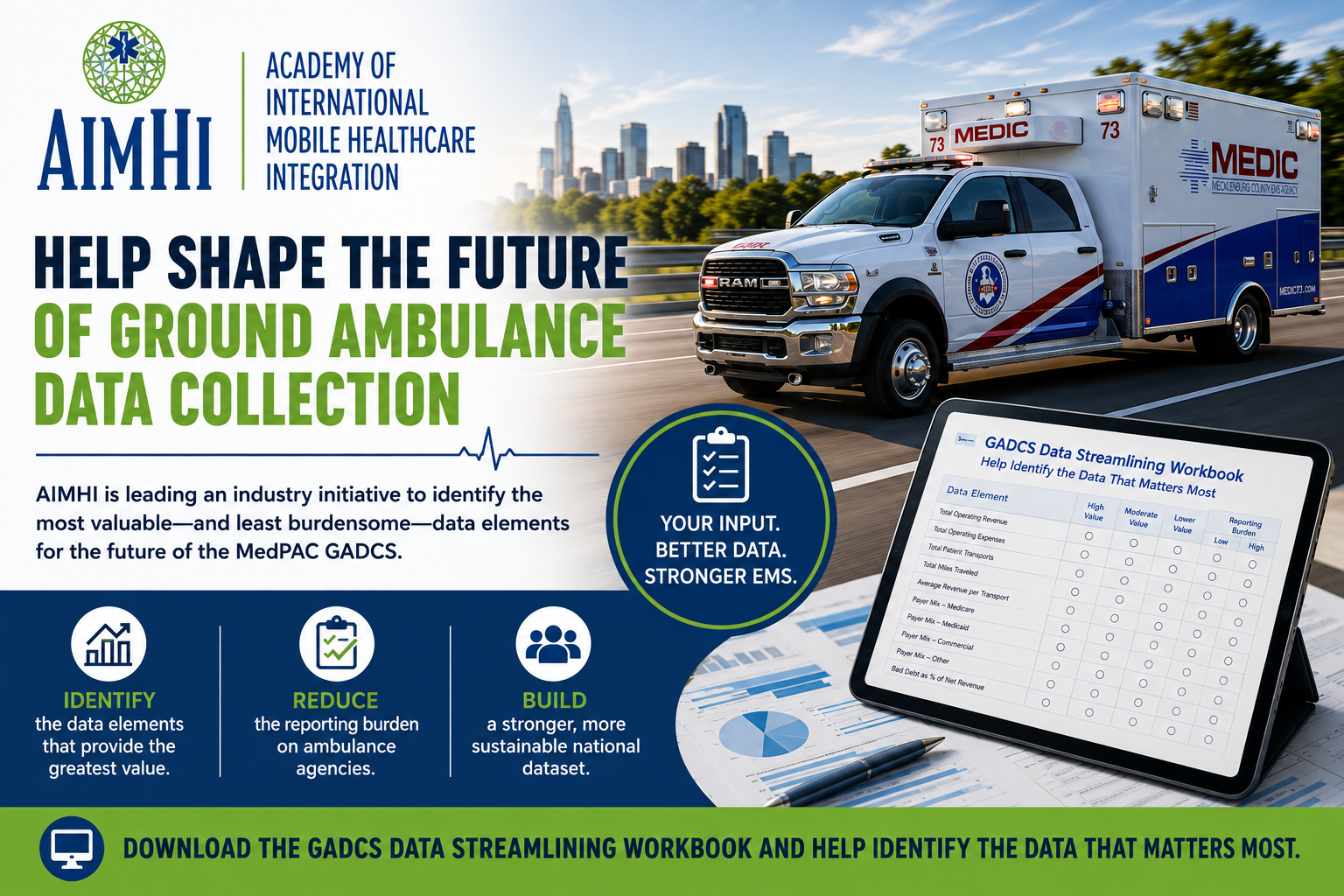
Help Shape the Future of Ground Ambulance Data Collection
AIMHI Launches Initiative to Identify the Most Valuable – and Least Burdensome – GADCS Data Elements
The Academy of International Mobile Healthcare Integration (AIMHI) is inviting ambulance agencies across the country to participate in an important initiative aimed at helping shape the future of the Medicare Ground Ambulance Data Collection System (GADCS).
Following the release of MedPAC’s recent report analyzing the first several years of GADCS data, AIMHI representatives met with MedPAC staff to discuss the current data collection process, the value of the information being collected, and opportunities to reduce the significant reporting burden placed on ambulance service providers.
One concept discussed was whether MedPAC and policymakers could obtain the information they need through a smaller, more focused set of high-value data elements, potentially collected more frequently from a rotating sample of ambulance agencies.
Such an approach could provide policymakers with more timely information about the economics of ambulance service delivery while substantially reducing the amount of information individual agencies are required to collect, calculate, validate, and report.
Now We Need the EMS Community’s Help
To help evaluate this concept, AIMHI has developed the GADCS Data Streamlining Workbook, which contains the current GADCS data elements and allows ambulance agencies to help identify which elements should be considered essential to a more streamlined data collection process.
We are asking ambulance agencies of all types, sizes, service models, and geographic settings to review the workbook and identify approximately 25–50 data elements, excluding basic agency demographic information, that meet three important criteria:
Value: The information is important for understanding the true costs, revenues, utilization, and economics of providing ambulance services.
Accessibility: The information can reasonably be obtained from data agencies already collect or maintain.
Sustainability: The data element could realistically be included in a streamlined reporting process without creating unnecessary administrative burden.
This is an expert opinion survey. Agencies are not being asked to compile operational or financial data, only to evaluate which GADCS data elements are most valuable and practical for future national reporting.
The goal is to identify the data that policymakers truly need, and that ambulance agencies can reasonably provide, to create a credible, sustainable national picture of ambulance service costs and revenues.
Most agencies should be able to complete this review in approximately 60 minutes.
Why This Matters
GADCS data are increasingly influencing federal discussions about ambulance reimbursement, the adequacy of Medicare payments, and the financial sustainability of EMS systems.
That makes the quality of the data critically important.
But more data does not necessarily mean better data.
A smaller number of well-defined, consistently reported data elements may ultimately provide policymakers with better and more timely information than an extensive data collection process that requires significant agency resources and occurs only periodically.
AIMHI has also encouraged MedPAC to conduct a similar exercise internally by identifying the data elements it considers most important to its analyses. Comparing MedPAC’s priorities with those identified by ambulance providers could help establish a core national ambulance dataset that balances policymaker needs with provider reporting burden.
Help Us Build the Recommendation
Once responses are received, AIMHI will aggregate the results and identify the data elements receiving the strongest support from ambulance agencies.
AIMHI also intends to share the findings with national EMS organizations and explore opportunities to collaboratively develop recommendations regarding the future of ground ambulance data collection.
A broad, consensus-based recommendation from the EMS community has the potential to carry considerably more weight than individual organizations or agencies approaching this issue independently.
This is an opportunity for ambulance agencies to help shape the future of GADCS.
We encourage ambulance leaders, finance professionals, reimbursement specialists, data analysts, and others familiar with their agency’s GADCS reporting experience to complete the AIMHI GADCS Data Streamlining Workbook and add their perspective to this important national conversation.
Download the GADCS Data Streamlining Workbook and help identify the data that matters most.